How Venue Upgrades Are Altering Mixed-Game Schedules Across Alberta's Regional Circuits
Written by Katja Jung · Nov 3, 2026
How Venue Upgrades Are Altering Mixed-Game Schedules Across Alberta's Regional Circuits
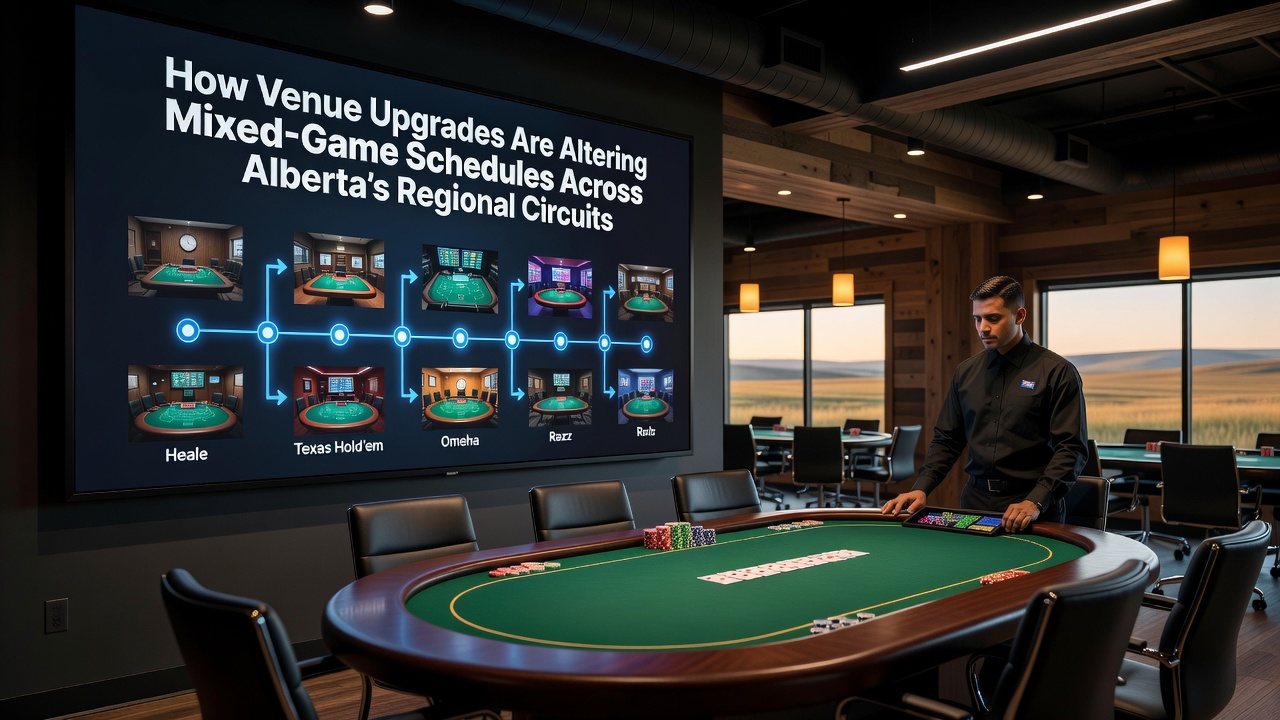
Venue upgrades across Alberta's regional poker circuits have prompted measurable shifts in mixed-game schedules, with facilities in Calgary, Edmonton, Lethbridge and smaller centers adding tables, improving layouts and extending operating hours to accommodate more variants such as Omaha, Seven-Card Stud and mixed formats that combine multiple disciplines. Data from the Alberta Gaming, Liquor and Cannabis shows increased table counts at several renovated sites, which in turn allows tournament directors to rotate through longer mixed-game sequences without overlapping with hold'em-only events.
Expanded Table Capacity and Schedule Adjustments
Renovations completed in late 2025 at multiple rural and suburban venues created additional playing space that previously limited mixed-game offerings to one or two nights per week. Observers note that these physical changes now support four or five consecutive mixed sessions on weekends, while mid-week calendars incorporate shorter mixed-game satellites that feed into larger monthly tournaments. The extra room also reduces wait times between rotations, so players move from hold'em to stud or Omaha hi-lo without extended breaks that once disrupted rhythm and attendance.
Regional Circuit Coordination in November 2026
By November 2026 several circuits have synchronized their mixed-game calendars around the upgraded venues, producing a staggered series where Lethbridge events run on the first weekend, Calgary hosts the second and Edmonton closes the month with a multi-day mixed championship. Tournament organizers report that the new floor plans allow simultaneous play of separate mixed tables without sound or sight-line interference, which previously forced circuits to stagger start times or cancel one variant when space ran short. This coordination has produced measurable increases in total entries for mixed events compared with the same period in prior years.
Impact on Travel and Participation Patterns
Improved facilities have altered travel routes for regular circuit participants who once skipped certain stops because older rooms lacked adequate mixed-game infrastructure. With better parking, climate control and food service now standard at upgraded sites, more players complete full regional loops in a single month. Figures reveal that venues equipped with new dealer stations and electronic timing systems run mixed-game rounds on tighter schedules, freeing evenings for additional cash-game options that keep out-of-town visitors on site longer.

Regulatory and Operational Considerations
Alberta Gaming, Liquor and Cannabis licensing updates tied to the upgrades require venues to demonstrate sufficient table separation and surveillance coverage before approving expanded mixed-game hours. Those requirements have encouraged operators to install modular table dividers and upgraded camera arrays, which in practice allow regulators to sign off on more frequent schedule changes without additional review cycles. Tournament staff at several locations have adjusted dealer rotation protocols to handle the faster pace of mixed formats, reducing errors that once occurred when older rooms forced cramped layouts.
Examples from Specific Venues
One Lethbridge facility completed a 2025 expansion that added twelve tables and a dedicated mixed-game area, resulting in a weekly schedule that now includes three distinct mixed tournaments instead of the single weekly event offered before construction. In Edmonton, a suburban card room introduced movable partition walls that convert a large tournament floor into smaller mixed sections on demand, enabling the venue to host simultaneous hold'em and stud events without relocating players mid-session. Similar adaptations appear at smaller circuit stops where modest square-footage gains have translated into reliable mixed-game programming that draws consistent local turnout.
Conclusion
Venue upgrades continue to reshape mixed-game availability by increasing physical capacity, refining operational flow and aligning regional calendars around newly flexible facilities. The resulting schedules reflect concrete changes in table counts, licensing approvals and travel patterns rather than abstract trends, and the pattern shows every sign of persisting through the 2026-2027 season as additional sites complete their own renovations.